
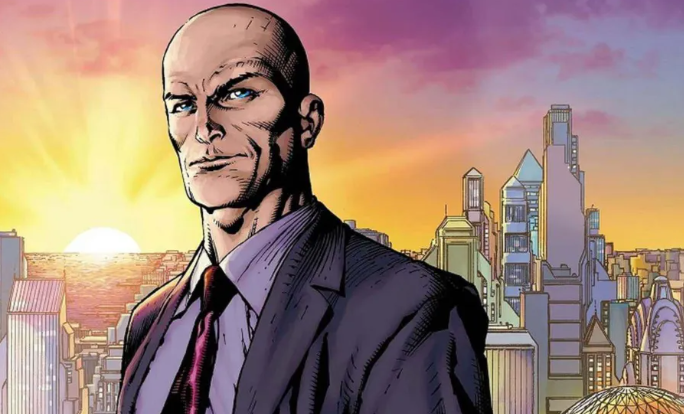
Few figures in the pantheon of graphic fiction command as much respect and terror as Alexander Joseph Luthor. While the DC Universe is populated by cosmic deities and interdimensional invaders, Lex Luthor remains its most formidable human threat. He is the quintessential self-made man who looked at a god and decided he wasn’t impressed. As the primary antagonist to Superman, Luthor represents the dark side of human ambition—the belief that one’s own brilliance justifies any cost.
To understand Lex Luthor is to understand the complexity of the “supervillain” archetype. He isn’t just a man with a grudge; he is a philosophical counterpoint to the idea of inherent goodness. Across decades of storytelling, his character has morphed to reflect the anxieties of the era, shifting from a mad scientist in a secluded laboratory to a corporate titan in a glass penthouse. This guide explores the multifaceted history of the man who would be king, offering a deep dive into the mind of Metropolis’s most dangerous citizen.
1. The Evolution of an Icon: From Mad Scientist to Corporate Mogul
Lex Luthor’s history is a fascinating study of character evolution. In his earliest iterations, he was depicted as a classic “mad scientist” archetype—a brilliant but unhinged genius with a full head of red hair who plotted world domination from secret hideouts. This version of Luthor was defined by his gadgets and his desire to prove his intellectual superiority through elaborate, often nonsensical, schemes. He was a creature of the laboratory, distant from the public eye and fueled by a primitive brand of villainy.
However, the character underwent a seismic shift in later eras, transforming into the sophisticated, high-powered billionaire businessman most fans recognize today. This “Modern Age” Luthor is the CEO of LexCorp, a massive conglomerate with its fingers in every industrial pie, from aerospace to pharmaceuticals. This change made him infinitely more dangerous; he was no longer a criminal hiding in the shadows, but a respected pillar of the community with the legal and financial resources to make life a living hell for his enemies. This duality—the genius inventor paired with the ruthless capitalist—creates a villain who is as comfortable in a boardroom as he is in a high-tech battle suit.
2. The Great Hair Debate: A Mistake That Became a Signature
One of the most recognizable physical traits of Lex Luthor is his baldness, yet many fans are surprised to learn that this iconic look was the result of a clerical error. In his debut appearance, Luthor possessed a thick mane of red hair. The transition to his hairless state occurred when an artist mistakenly drew Luthor to look like his henchman or another bald character in the story. Rather than correcting the error, the publishers embraced it, realizing that the bald head added a layer of severity and intellectual coldness to the character’s silhouette.
To explain this change within the story, writers later introduced a tragic backstory involving a young Lex and a young Clark Kent (Superboy). In this version, a laboratory fire caused by a well-meaning but clumsy Superboy led to chemical exposure that cost Lex his hair permanently. This accidental disfigurement served as the catalyst for his lifelong hatred of the Man of Steel. While this specific origin has been tweaked and “rebooted” many times, the core idea remains: Lex views his baldness as a physical reminder of the perceived incompetence and danger of super-powered beings. It transformed a simple artist’s mistake into a symbol of a cosmic-level grudge.
3. The Xenophobic Philosophy: Why He Truly Hates Superman
To the casual observer, Lex Luthor’s hatred for Superman might seem like simple jealousy, but Luthor himself frames it as a noble, pro-human crusade. He views Superman not as a hero, but as a “space invader” who stunts human progress. Luthor’s core argument is that by solving all of humanity’s problems—stopping disasters, curing illnesses, and ending wars—Superman creates a “safety net” that makes the human race weak and dependent. In Luthor’s mind, if Superman had never arrived, humanity would have been forced to innovate and achieve those same heights on its own.
This perspective makes Luthor a compelling antagonist because he genuinely believes he is the hero of the story. He sees himself as the champion of the human spirit, the one man brave enough to challenge the “alien god” who has charmed the world into a state of complacency. Of course, this philosophy is often a smokescreen for his own ego. Lex cannot stand that there is someone in the world he cannot buy, intimidate, or surpass in power. His xenophobia is inextricably linked to his narcissism; he hates Superman because the Man of Steel is the only being who makes the great Lex Luthor feel small.
4. The Ultimate Power Move: President Lex Luthor
Perhaps the most audacious arc in the character’s history was his successful campaign for the Presidency of the United States. In a stunning display of political maneuvering and public relations, Luthor managed to convince the American voting public that a billionaire industrialist was the only person capable of leading the country through a period of crisis. He used his vast wealth to fund a grassroots campaign and utilized LexCorp’s resources to “fix” national problems, presenting himself as a pragmatic, effective alternative to traditional politicians.
His time in the White House was a nightmare for the superhero community. As Commander-in-Chief, Luthor had the legal authority to brand Superman and Batman as enemies of the state. He utilized government agencies to hunt down masks and capes, all while maintaining a high approval rating from a public that remained blind to his darker machinations. This era of the comics highlighted the true extent of Luthor’s danger: his ability to weaponize the very systems of democracy against those who protect it. It wasn’t until his ego led him to a drug-fueled breakdown and an open admission of his crimes that his administration finally crumbled, leaving a lasting scar on the DC political landscape.
5. The LexCorp Empire: A Web of Global Influence
LexCorp is more than just a company; it is the manifestation of Luthor’s desire for total control. Headquartered in the iconic LexCorp Tower in the heart of Metropolis, the corporation has its hand in almost every sector of the global economy. From providing the city’s electricity to manufacturing the satellites that monitor the globe, LexCorp is the invisible hand that keeps the world turning. For Luthor, the company is both his primary weapon and his most effective shield, allowing him to conduct illicit research under the guise of “corporate innovation.”
The true genius of LexCorp lies in its integration into daily life. It is “too big to fail,” meaning that any attempt to take Luthor down risks collapsing the economy or disabling vital infrastructure. This gives Lex a level of immunity that few other villains possess. He often uses LexCorp as a testing ground for experimental weaponry, frequently developing “defense” contracts for the military that are secretly designed to counter Superman’s specific power set. Whether it’s through media manipulation or advanced robotics, LexCorp ensures that even when Luthor is behind bars, his influence remains omnipresent across the globe.
6. The Green Menace: Obsession with Kryptonite
Since he possesses no inherent superpowers, Luthor has dedicated his life to mastering the one substance that can bring a Kryptonian to their knees: Kryptonite. He is perhaps the world’s leading expert on the radioactive remnants of Superman’s home planet. Lex has utilized Kryptonite in every conceivable way, from fashioning it into weaponry to using it as a power source for his high-tech machinery. For a long period, he even wore a ring set with a Kryptonite stone to ensure that the Man of Steel could never get too close to him.
However, this obsession came with a heavy price. Luthor’s arrogance led him to believe that Kryptonite radiation was only harmful to aliens. Over years of constant exposure, he eventually developed a terminal form of cancer, leading to the loss of his hand and, eventually, a desperate plot to transfer his consciousness into a new, healthy body. This irony is a central theme of his character: in his quest to destroy his rival, Luthor often destroys himself. Despite the risks, he continues to seek out new variants of the mineral—Red, Blue, and Gold—treating the substance as the ultimate equalizer in his war against the divine.
7. The Warsuit: When Brains Meet Brawn
While Lex Luthor prefers to manipulate events from a distance, he is not afraid of a physical confrontation when the situation demands it. To level the playing field, he developed his signature “Warsuit,” a marvel of engineering that grants him strength, flight, and durability comparable to a high-tier metahuman. Often colored in his signature purple and green palette, the suit is powered by Kryptonite energy and comes equipped with a dizzying array of weaponry, including energy blasts, force fields, and specialized tools designed to exploit Superman’s weaknesses.
The Warsuit is a testament to Luthor’s engineering genius. It is not merely a suit of armor, but a mobile fortress that allows a baseline human to trade blows with the most powerful beings in the multiverse. In various stories, the suit has been upgraded with alien technology from places like Apokolips or Brainiac’s data banks, making it one of the most dangerous pieces of hardware in existence. For Luthor, wearing the suit is a psychological statement: it is his way of proving that human technology, guided by his superior mind, can overcome any biological or “miraculous” advantage.
8. The Bizarro Experiment: A Failed Mirror of Perfection
Luthor’s desire to possess the power of Superman led to one of his most famous and tragic failures: the creation of Bizarro. In an attempt to clone the Man of Steel, Luthor’s scientists encountered the immense difficulty of duplicating Kryptonian DNA. The result was a distorted, reverse-image of the hero—a creature with pale, chalky skin, a fractured mind, and powers that were often the exact opposite of the original (such as freeze-vision instead of heat-vision). Instead of a loyal super-soldier, Luthor created a confused, misunderstood monster.
Bizarro represents the folly of Luthor’s ambition. In trying to play god, he only succeeded in creating a parody of the thing he hated most. While Luthor initially viewed Bizarro as a disposable tool, the relationship between the two has occasionally shown glimpses of strange, paternal complexity. Luthor often feels a twisted sense of responsibility for his “son,” even if that responsibility is usually expressed through manipulation and further experimentation. Bizarro serves as a permanent, lumbering reminder that no matter how much Lex tries to control the forces of nature, there are some things that even his intellect cannot perfect.
9. An Unexpected Ally: Luthor in the Justice League
One of the most shocking developments in the annals of the DC Universe was Lex Luthor’s tenure as a member of the Justice League. Following a global crisis where the world’s heroes were incapacitated, Luthor stepped up to lead a group of villains in saving the planet. Using this newfound “heroic” status as leverage, he managed to secure a spot on the League’s roster. During this period, Lex attempted to prove that he could be a more effective protector than Superman, utilizing his resources and strategic mind to solve problems the League had traditionally struggled with.
While his teammates remained rightfully suspicious, Luthor’s time as a “hero” was surprisingly productive. He provided the team with advanced technology and helped uncover threats that had escaped the heroes’ notice. However, his motivations remained fundamentally selfish; he wanted the fame, the adulation, and the access to the League’s secrets. This era explored the idea of whether a “bad man” can do “good things” and highlighted Luthor’s desire for validation. Ultimately, the partnership was short-lived, as Luthor’s ego and secret agendas inevitably clashed with the League’s moral code, but it remains a fascinating chapter that added layers of grey to his black-and-white villainy.
10. The Legacy of the Ultimate Rivalry
At the end of the day, Lex Luthor’s greatest contribution to the DC Universe is the way he defines Superman. Without Luthor, Superman is just a powerful man doing good; with Luthor, Superman is a symbol of hope being tested by the ultimate skeptic. Their rivalry is not just a battle of physical strength versus mental cunning; it is a clash of worldviews. Lex represents the cynical belief that power is meant to be taken and held, while Superman represents the belief that power is meant to be shared and used for the service of others.
This eternal struggle has spanned countless alternate realities, future timelines, and cinematic adaptations. In every version of the story, Luthor is the mirror that reflects Superman’s humanity. By constantly challenging the hero’s motives and methods, Luthor forces Superman to be better, more transparent, and more connected to the people he protects. Even as he plots to kill the Man of Steel, Luthor has become an essential part of the legend. He is the shadow that makes the light seem brighter, the man who refused to bow, and the genius who proves that the greatest power in the universe is not flight or strength, but the human mind—for better or for worse.
Further Reading
- Lex Luthor: A Celebration of 75 Years by Various Authors: A comprehensive anthology of the most important Luthor stories across comic book history.
- Lex Luthor: Man of Steel by Brian Azzarello: A gritty, grounded look at the character’s perspective and his reasons for viewing Superman as a threat.
- Superman: President Luthor by Various Authors: The definitive collection of the storyline where Lex takes the highest office in the United States.
- Luthor by Brian Azzarello and Lee Bermejo: A standalone graphic novel that delves deep into the psychology of the man and his vision for Metropolis.
- 10 Things You Should Know About Kang the Conqueror – Marvel Comics
- 10 Things You Should Know About The Sentry – Marvel Comics
- 10 Things You Should Know About Starlight From The Boys TV Show
- 10 Things You Should Know About Ghost Rider – Marvel Comics
- DC Comics: 10 Essential Things to Know About Shazam
- DC Comics: 10 Essential Things to Know About Sinestro
- DC Comics: 10 Essential Things to Know About The Reverse Flash
- DC Comics: 10 Essential Things to Know About Hal Jordan
- DC Comics: 10 Essential Things to Know About The Green Lanterns
- DC Comics: 10 Essential Things to Know About Mr Freeze



