
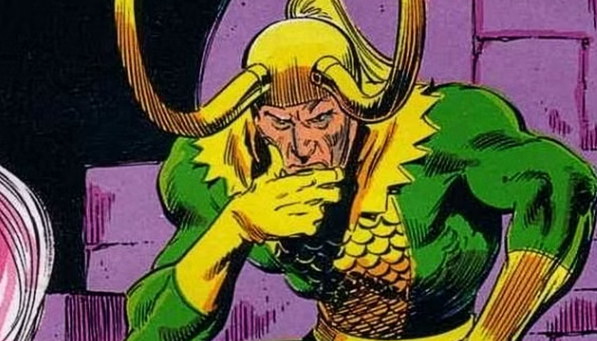
In the vast tapestry of the Marvel Universe, few characters command as much fascination, frustration, and fleeting loyalty as Loki Laufeyson. Known primarily as the God of Mischief, Loki occupies a unique space that transcends the traditional boundaries of “hero” or “villain.” He is a master of the silver tongue, a weaver of illusions, and the ultimate wildcard in any cosmic conflict. To understand Loki is to understand the very nature of storytelling itself—a character who is constantly reinventing his identity to survive an ever-changing multiverse.
Whether you first encountered him as the cackling antagonist of the Silver Age or the complex, tragic anti-hero of modern graphic novels, Loki’s history is a labyrinth of myth and subversion. He is not merely a foil for his brother, Thor, but a foundational pillar of the Marvel mythos. To truly appreciate this emerald-clad sorcerer, one must look past the horned helm and explore the deeper truths of his Frost Giant heritage, his role in founding Earth’s mightiest teams, and his existential struggle against destiny. Here are the ten essential things you should know about Marvel’s most enduring enigma.
1. The Tragic Frost Giant Heritage of Loki Laufeyson
While he is often introduced as the Prince of Asgard, Loki’s biological roots lie in the frozen, unforgiving wasteland of Jotunheim. He is the son of Laufey, the King of the Frost Giants. However, Loki was born a “runt”—shorter and smaller than his gargantuan kin. Shamed by his stature, Laufey kept the infant hidden away, a secret stain on his royal bloodline. It was only after a bloody war between Asgard and Jotunheim that Odin, the All-Father, discovered the abandoned child within the primary fortress of the giants.
Odin, moved by a mixture of pity and a calculated desire to bridge the two warring realms, adopted Loki and raised him alongside his biological son, Thor. This adoption serves as the core of Loki’s eternal identity crisis. He grew up in a culture that prized physical prowess, golden hair, and martial honor—traits Thor possessed in abundance. Loki, meanwhile, found himself small, dark-haired, and naturally inclined toward the subtle arts of magic. This fundamental “otherness” fueled a lifelong resentment, making him feel like a permanent outsider in the very palace he called home. His journey is a Shakespearean tragedy of a man trying to prove he belongs to a world that was never truly his.
2. The Unintentional Architect of the Avengers
It is one of the great ironies of Marvel history that the world’s most celebrated team of heroes owes its existence to its most notorious villain. Loki was the primary catalyst for the formation of the Avengers. In his relentless pursuit of vengeance against Thor, Loki attempted to frame the Incredible Hulk for an act of sabotage, hoping to lure his brother into a fatal confrontation. However, his plan backfired spectacularly when his magical interference inadvertently drew the attention of other heroes, including Iron Man, Ant-Man, and the Wasp.
Loki’s machinations were too complex for his own good. By attempting to manipulate the most powerful beings on Earth like chess pieces, he forced them to communicate and collaborate for the first time. When the smoke cleared and Loki was defeated, the heroes realized that they were stronger together than they were apart. Loki didn’t just provide the threat; he provided the reason for the “Heroic Age” to begin. He remains the standard against which all Avengers-level threats are measured, serving as the ultimate “big bad” who proved that even the most chaotic forces of the universe can be held at bay by a unified front.
3. Mastery of Sorcery and the Illusionist’s Art
Loki is often described as a “magician,” but that term barely scratches the surface of his capabilities. In the Marvel Universe, Loki is one of the most powerful practitioners of sorcery in existence, often rivaling the Sorcerer Supreme in sheer raw talent. His magic is not based on brute force, but on the manipulation of perception and reality. He can project his image across galaxies, create indistinguishable duplicates of himself, and transform his physical appearance at will. This shape-shifting ability is not merely a parlor trick; it is a fundamental expression of his fluid nature.
Beyond illusions, Loki commands a terrifying array of offensive and defensive spells. He can blast energy, create impenetrable force fields, and imbue mundane objects with temporary sentience or magical properties. His intellect is his greatest amplifier; he understands the mechanics of the universe better than almost any other Asgardian. While Thor relies on the physical impact of Mjolnir, Loki relies on the “glamour”—the ability to make someone see exactly what they fear or desire most. This makes him a psychological nightmare for his opponents, as fighting Loki often means fighting one’s own senses.
4. The Fluidity of Identity and Lady Loki
One of the most distinctive aspects of Loki in the comics is his inherent gender fluidity. Because Loki is a master shape-shifter and a being of pure magic, he does not view form or gender as a fixed constraint. This was most famously explored during a period following a great cataclysm in Asgard, where Loki was reborn in a female body. During this era, she was known as “Lady Loki,” and she navigated the political landscapes of the Marvel Universe with a different kind of grace and ruthlessness.
This was not a disguise or a temporary ruse; Loki truly lived as a woman, proving that the essence of the character remains consistent regardless of outward appearance. Marvel has explicitly confirmed that Loki is genderfluid and pansexual, making him one of the most prominent LGBTQ+ figures in high-fantasy storytelling. This fluidity reinforces the idea that Loki is a “chaos agent.” He cannot be pinned down by societal labels or biological expectations. Whether appearing as a man, a woman, or even a different species, Loki’s core motivations—ambition, survival, and the need for recognition—remain the driving forces of his narrative.
5. The Cycle of Death and the Rebirth as Kid Loki
In the cycle of Asgardian existence, death is rarely the end, but Loki’s “death” was particularly significant. Seeking to wipe his slate clean and escape the villainous destiny he felt trapped in, Loki manipulated circumstances to ensure his own demise and subsequent rebirth. He returned as a young boy, often referred to as “Kid Loki.” This version of the character was fundamentally different; he possessed the memories of his past sins as a vague, haunting shadow but lacked the malice of his former self.
Kid Loki represents the struggle for redemption. He joined the Young Avengers and desperately tried to be a hero, but he was constantly met with suspicion by the adult heroes who remembered his predecessor’s crimes. This era of Loki’s history is a poignant exploration of whether a person can truly change their nature or if they are doomed by their “narrative.” The tragedy of Kid Loki is a fan-favorite storyline, as it highlights the heavy burden of a reputation. It asks a difficult question: if the universe demands you be a villain, do you have the strength to remain a hero?
6. The God of Stories and the Power of Narrative
In recent interpretations, Loki has evolved beyond the title of “God of Mischief” to become the “God of Stories.” This transition marks a profound shift in his role within the Marvel cosmology. As the God of Stories, Loki realizes that reality is essentially a collection of narratives, and he who controls the story controls the world. This meta-textual evolution allows Loki to step outside the traditional “hero/villain” binary. He understands that his role in the universe is to provide the conflict that makes the “golden” heroes shine, but he also learns to rewrite his own ending.
As the God of Stories, Loki’s power becomes almost limitless but also deeply philosophical. He uses his magic to protect the “truth” of stories, ensuring that legends are preserved even when the world ends. This version of Loki acts as a chronicler and a protector of the multiverse’s history. By embracing this new identity, he finally finds a way to be useful to Asgard without sacrificing his cunning nature. It is the ultimate evolution of a character who spent centuries being lied to and lying to others—he finally found a truth worth protecting.
7. The Complex Brotherhood with the God of Thunder
The relationship between Loki and Thor is the emotional heartbeat of the Asgardian corner of the Marvel Universe. It is a bond defined by a toxic mixture of genuine fraternal love and murderous sibling rivalry. In their youth, they were inseparable, with Loki’s wits often bailing Thor out of trouble. However, as they grew, the gap between them widened. Thor became the celebrated warrior-prince, while Loki became the “prince of lies” who lived in his brother’s literal and metaphorical shadow.
Most of Loki’s early villainy was driven by a desperate need to be Thor’s equal. He didn’t just want the throne; he wanted the adoration that Thor received effortlessly. Over the decades, their relationship has shifted from bitter enemies to uneasy allies and back again. There are moments of profound tenderness where Loki risks everything to save his brother, followed by betrayals that cut Thor to the quick. This “push and pull” makes them one of the most relatable duos in comics, mirroring the complexities of real-world family dynamics where love and resentment often occupy the same space.
8. Loki’s Weapons: From Laevateinn to the Norn Stones
While Thor is defined by his hammer, Loki utilizes a much more diverse and exotic arsenal. His primary weapon is often cited as Laevateinn, an ancestral sword (or sometimes a staff) forged in the fires of the underworld. Unlike Mjolnir, which represents order and worthiness, Loki’s weapons represent chaos and versatility. Laevateinn can be summoned from thin air and is often enchanted to strike through magical defenses or project devastating energy blasts.
Beyond his sword, Loki frequently employs the Norn Stones, ancient artifacts that grant the wielder various powers, such as flight, teleportation, or enhanced physical strength. He is also known to use the Gram, a legendary sword of truth capable of slaying even the most powerful dragons and gods. Loki’s choice of weaponry often reflects his tactical mind; he doesn’t carry a weapon to hit things harder, but to provide a specific solution to a specific problem. His gear is an extension of his intellect, designed to catch his enemies off-guard and exploit their weaknesses.
9. Tenure as the Sorcerer Supreme
In a surprising turn of events that shocked the magical community, Loki once took over the mantle of Sorcerer Supreme from Doctor Strange. During this period, Loki claimed that he won the title through a fair contest of magical skill and merit, though the circumstances were, as always, shrouded in mystery. As the Sorcerer Supreme, Loki took his duties surprisingly seriously, defending Earth from mystical threats that even Doctor Strange struggled to contain.
This era showcased a different side of Loki: the responsible protector. Although his methods remained unorthodox and his motives were constantly questioned, he proved that he had the discipline and power required to hold the highest magical office in the dimension. However, the tenure also revealed the heavy cost of such power and the loneliness that comes with being the world’s ultimate magical defense. It served as a reminder that Loki is a creature of immense capability who often chooses chaos simply because the burden of “order” is too heavy for him to bear for long.
10. The Eternal Outsider: Why Loki Remains Relatable
At his core, Loki is the patron saint of the misunderstood. He represents everyone who has ever felt like they didn’t fit in, everyone who has been overlooked in favor of a “golden child,” and everyone who has made mistakes they are desperate to fix. While his actions are often grand and villainous, his motivations are deeply human. He is driven by insecurity, a desire for validation, and a fierce sense of self-preservation.
Loki’s enduring popularity stems from his complexity. He is not a one-dimensional “evil” character; he is a survivor. In a universe filled with paragons of virtue like Captain America or cosmic entities like Galactus, Loki is a reminder that being flawed is part of being alive. He fails, he lies, he cries, and he tries again. He is the ultimate underdog who uses his wits to navigate a world built for giants and gods. As long as there are stories about the struggle to find one’s place in the world, Loki will remain one of the most relevant and beloved characters in the Marvel canon.
Further Reading
- Loki: Agent of Asgard by Al Ewing
- Journey into Mystery by Kieron Gillen
- Thor & Loki: Blood Brothers by Robert Rodi
- Loki by Daniel Kibblesmith
- Thor: The Trials of Loki by Roberto Aguirre-Sacasa
- 10 Things You Should Know About Kang the Conqueror – Marvel Comics

- 10 Things You Should Know About The Sentry – Marvel Comics

- 10 Things You Should Know About Starlight From The Boys TV Show

- 10 Things You Should Know About Ghost Rider – Marvel Comics

- DC Comics: 10 Essential Things to Know About Shazam





One response to “10 Things You Should Know About Loki – Marvel Comics”
[…] 10 Things You Should Know About Loki – Marvel Comics […]