
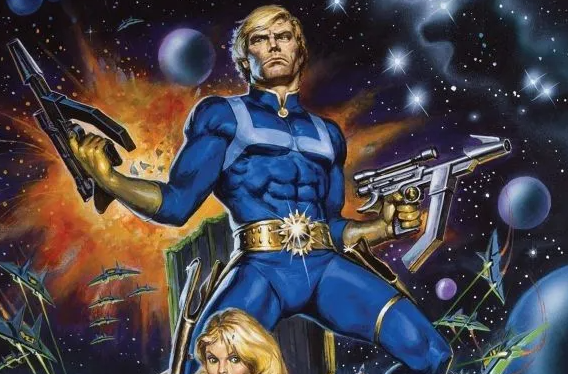
In the vast, star-dappled expanse of the Marvel Universe, few characters have undergone a transformation as radical or as compelling as Peter Quill, the man known as Star-Lord. While many fans recognize him as the wisecracking, music-loving leader of the Guardians of the Galaxy, his comic book history is a deep, often somber odyssey that blends high-concept science fiction with the grit of a war veteran. He is a character defined by his contradictions: a prince of a galactic empire who prefers the life of a scavenger; a master strategist who often leads through sheer improvisation; and a human born on Earth who found his true home among the farthest reaches of the cosmos.
To truly understand Star-Lord is to look past the leather jacket and the twin blasters. In the pages of Marvel Comics, Peter Quill is a figure of immense importance, a cosmic bridge between the terrestrial concerns of Earth’s heroes and the existential threats that loom in the “Negative Zone” or the “Cancerverse.” Whether he is wielding the ancient power of the Master of the Sun or leading a ragtag group of misfits against an invading swarm, Star-Lord remains the quintessential space adventurer. This guide explores the foundational elements of his lore that every enthusiast should know.
Keyword Research
- Primary Keyword: Star-Lord Marvel Comics
- Secondary Keywords: Peter Quill origin story, Element Gun, J’son of Spartax, Guardians of the Galaxy leader, Ravagers, Meredith Quill, Marvel cosmic lore, Master of the Sun.
1. The NASA Dreamer: An Unconventional Terrestrial Start
Long before he was a galactic peacekeeper, Peter Quill was a young man with a singular, burning obsession: the stars. Unlike many superheroes who gain their powers through accidents or inheritance, the comic book version of Peter Quill was driven by a deep-seated desire to leave Earth. Following the tragic death of his mother at the hands of alien assassins, Peter dedicated his life to the pursuit of astronautics. He didn’t just want to visit space; he wanted to conquer the trauma of his past by finding the beings who took his family.
His journey began at NASA, where he trained as an astronaut. However, Peter was far from a model student. His abrasive personality and “loner” attitude often put him at odds with his superiors. In his original comic book appearance, he actually stole a scout ship to reach a mysterious cosmic entity known as the Master of the Sun, rather than being kidnapped as a child. This version of Peter Quill is a self-made man—a character whose entry into the cosmic arena was a choice born of stubbornness and a refusal to be grounded by the gravity of Earth’s limitations. It establishes him as a protagonist who isn’t just “lucky” to be in space; he fought every inch of the way to get there.
2. The Element Gun: A Weapon of Ancient Heritage
While Star-Lord is proficient with a wide array of galactic weaponry, his signature tool is the Element Gun. This is not a standard laser pistol or plasma blaster; it is a unique, meta-human artifact that is genetically keyed to the Spartax royal bloodline. The weapon is essentially a portable conduit for the four classical elements: Earth, Air, Fire, and Water. This allows Star-Lord to adapt to almost any combat scenario, whether he needs to create a wall of stone for defense or a localized vacuum to extinguish a fire.
The Element Gun is more than just a firearm; it is a symbol of Peter’s connection to his father’s heritage, even when he tries to deny it. Because the weapon draws from the natural forces of the universe, its power is theoretically infinite, limited only by the wielder’s imagination and willpower. In the comics, this weapon often serves as a plot device to showcase Peter’s ingenuity. He doesn’t just “shoot” his way out of problems; he uses the elements to manipulate the environment, proving that he is as much a scientist and tactician as he is a gunslinger. The gun is an extension of his identity—a terrestrial concept (the elements) utilized on a galactic scale.
3. The Spartax Connection: Royalty and Rebellion
A major pillar of Star-Lord’s comic lore is his complicated relationship with the Spartax Empire. Peter is the son of J’son of Spartax, the Emperor of a massive, technologically advanced civilization. J’son crashed on Earth years ago and fell in love with Meredith Quill, but he was forced to leave before Peter was born to attend to a galactic war. This makes Peter Quill a “Prince of Spartax,” a title he often views with a mixture of disdain and irony.
The dynamic between Peter and J’son is one of the most enduring “father-son” conflicts in Marvel’s cosmic history. J’son is often depicted as a cold, manipulative pragmatist who views the galaxy through the lens of political power and imperial expansion. Peter, conversely, is a champion of individual freedom and chaos. This conflict has led to Peter being both an heir to the throne and a “Most Wanted” criminal within Spartax space. His royal blood gives him access to ancient technology and a seat at the table of galactic politics, but his heart remains with the outcasts and the rebels, making him a perpetual outsider in his own kingdom.
4. The Master of the Sun: A Mystical Transfiguration
In his earliest iterations, Peter Quill’s transition into “Star-Lord” was a mystical event rather than a military promotion. He encountered a being known as the Master of the Sun, a cosmic entity that granted him the mantle of Star-Lord to act as a planetary defender. This origin story imbues the character with a sense of “cosmic destiny” that sets him apart from the more grounded, roguish version seen in recent years. The Master of the Sun essentially “reborn” Peter, stripping away his anger and giving him a purpose that transcended his personal vendettas.
This mystical side of Star-Lord has seen a resurgence in modern comics, where he has evolved into a “Sun-Lord.” In this state, his body can channel immense amounts of solar energy, granting him longevity and the ability to project power on a god-like level. This development reminds readers that Peter Quill is not just a guy with a mask and a jetpack; he is a cosmic pillar who has been fundamentally changed by his exposure to the deep mysteries of the universe. He represents the “Mastery” of one’s own fate, moving from a victim of tragedy to a sovereign of the stars.
5. The Annihilation Veteran: A Hardened War Hero
If you want to see the “gritty” side of Star-Lord, you must look at his role during the Annihilation events. When the Annihilation Wave—a seemingly endless swarm of insectoid monsters from the Negative Zone—began devouring the universe, Peter Quill was one of the first heroes to stand on the front lines. During this era, he wasn’t the funny “Star-Lord” we know; he was a battle-hardened commander who had discarded his mantle and his gadgets to serve as a military advisor.
This period of his life is crucial because it defines his tactical brilliance. He was tasked with leading a “suicide squad” of cosmic prisoners (including a very early version of the Guardians) to sabotage the enemy. The trauma of the Annihilation War, where trillions of lives were lost, is what ultimately drove Peter to form the Guardians of the Galaxy. He realized that the universe needed a “proactive” team to stop threats before they escalated into total extinction events. His leadership isn’t based on ego; it’s based on the “thousand-yard stare” of a man who has seen entire galaxies burn and refuses to let it happen again.
6. Ship (Aurora): The Sentient Partner
Before Peter joined a team, his primary companion was Ship, also known as Aurora. Ship was a sentient energy-form that could manifest as a starship, a humanoid woman, or even a small device. She was created from the consciousness of a living star and shared a deep, empathic link with Peter. This wasn’t just a vehicle; it was a soulmate. Their relationship was one of the most unique “partnerships” in comics, as they literally shared thoughts and feelings.
Ship provided Peter with more than just transportation; she gave him a moral compass and a sense of belonging in the vastness of space. Tragically, Ship was destroyed during a conflict with a herald of Galactus, an event that left Peter emotionally devastated and led him to abandon the “Star-Lord” name for a time. The loss of Ship is a key part of Peter’s “loner” mythos; it explains why he was so hesitant to open up to a team like the Guardians. He had already lost his most intimate connection to the stars, making his eventual “found family” with Rocket, Groot, and Gamora all the more poignant.
7. The Ravagers vs. The Space Pirates
In the comics, the Ravagers do not play the same “found-family” role they do in other media. While Peter did spend time among space pirates, his relationship with Yondu Udonta is vastly different. In the original continuity, Yondu was a noble warrior from the 31st century, while in later “reimagined” versions, he was a more cynical pirate who Peter eventually betrayed or outsmarted. Peter’s time as a space pirate was more of a “survival of the fittest” education than a period of paternal bonding.
His experience with space-faring criminals taught him the “underground” language of the galaxy. He learned how to bypass high-security blockades, how to haggle with Skrull black-marketeers, and how to stay invisible to the Nova Corps. This “scoundrel” education is what makes him so effective as a leader; he knows how the villains think because he lived among them. It gives him a “street-smart” edge that traditional galactic heroes like Nova (Richard Rider) or the Silver Surfer often lack. Peter Quill is a hero who knows when to follow the rules and, more importantly, when to break them to save a civilization.
8. The Engagement to Kitty Pryde
One of the most famous and unexpected romances in Marvel’s cosmic history was the relationship between Peter Quill and the X-Men’s Kitty Pryde. The two met during a crossover event and shared a long-distance relationship facilitated by holographic “phone calls” across lightyears. Their bond was so strong that Peter eventually proposed, and Kitty even took over the mantle of “Star-Lord” (as the Star-Lady) for a time while Peter was occupied with the throne of Spartax.
This relationship was significant because it grounded Peter’s cosmic adventures in the “real world” of the Marvel Universe’s Earth-based politics. It showed that despite his royal heritage and cosmic duties, Peter still had a deep affection for his home planet. The pairing with Kitty Pryde highlighted Peter’s growth; he was willing to let someone else lead and was capable of a mature, committed partnership. While the relationship eventually ended, it remains a favorite era for many fans, showcasing a time when the “Deadliest Woman” (Gamora) wasn’t the only powerful hero to capture the heart of the Star-Lord.
9. The Burden of Proactive Heroism
When Peter Quill formed the modern Guardians of the Galaxy, he did something morally questionable: he had the telepathic hero Mantis “nudge” the minds of the potential members to ensure they would join the team. He felt the threat to the universe was so great that he couldn’t wait for them to volunteer. When the team eventually found out, it led to a massive fracture in their trust, with several members leaving in disgust.
This “ends justify the means” approach is a defining trait of Peter’s comic book leadership. He is not a “pure” hero in the vein of Captain America. He is a man who carries the weight of billions of lives on his shoulders and is willing to sacrifice his own integrity to ensure the galaxy’s survival. This makes him a much more complex character than a simple “funny space man.” He is a man haunted by his choices, constantly trying to balance his natural desire for freedom with the heavy responsibility of being the “Guardian” that the universe needs him to be.
10. The Eternal Return: An Icon of Resilience
Peter Quill’s story is ultimately one of resilience. He has died and been reborn; he has been an emperor and a prisoner; he has been a god and a beggar. Through every iteration, the “Star-Lord” remains a symbol of humanity’s potential in the face of the infinite. He proves that a person from a “primitive” planet like Earth can not only survive in the cosmic arena but can lead it, reshape it, and protect it.
His longevity as a character stems from his relatability. Even when he is wielding an Element Gun or commanding a sentient starship, his motivations—loss, love, and the search for family—are deeply human. He is the bridge between the audience and the bizarre, alien wonders of the Marvel Universe. As long as there are stars to explore and threats emerging from the dark corners of space, Peter Quill will be there, likely with a smirk on his face and a plan that shouldn’t work but somehow does. He is the ultimate “Star-Lord”—not because of a title, but because of his refusal to ever give up on the galaxy.
Further Reading
- Annihilation: Conquest – Dan Abnett and Andy Lanning
- Guardians of the Galaxy: Legacy – Dan Abnett and Andy Lanning
- Star-Lord: Grounded – Chip Zdarsky
- Legendary Star-Lord – Sam Humphries
- 10 Things You Should Know About Kang the Conqueror – Marvel Comics

- 10 Things You Should Know About The Sentry – Marvel Comics

- 10 Things You Should Know About Starlight From The Boys TV Show

- 10 Things You Should Know About Ghost Rider – Marvel Comics

- DC Comics: 10 Essential Things to Know About Shazam




One response to “10 Things You Should Know About Star Lord – Marvel Comics”
[…] 10 Things You Should Know About Star Lord – Marvel Comics […]